
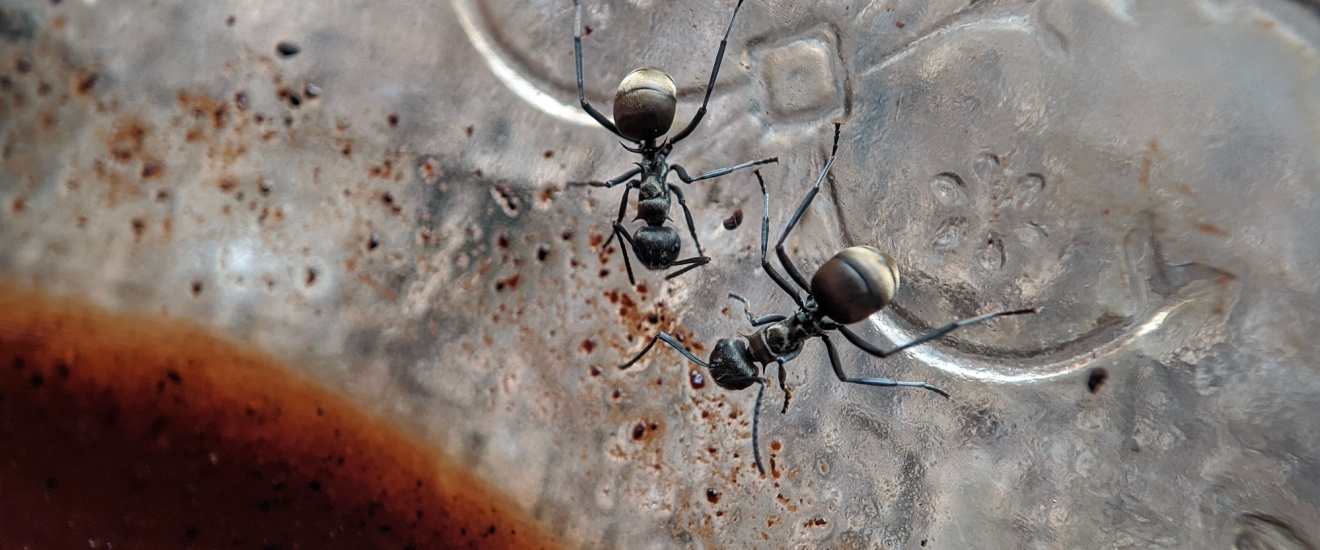
Ants are among the most frequent household pests in Fresno, and while they may seem small, their colonies can cause big headaches. These insects are highly organized, capable of spreading quickly through walls, kitchens, and outdoor spaces in search of food and moisture. Once established, they can contaminate food, damage property, and create persistent trails that are hard to eliminate. Identifying the species invading your home is crucial because each type has distinct habits, preferences, and nesting behaviors. Let’s break down the most common ant species you’re likely to encounter in Fresno homes.
1. Argentine Ants
Argentine ants are one of the most widespread invaders in Fresno homes, largely because of their ability to form massive colonies that stretch across entire neighborhoods. These ants are highly social, with multiple queens working together to expand their population rapidly. Indoors, they’re drawn to sugary foods and moisture, often appearing in kitchens, bathrooms, and laundry areas. Outdoors, they thrive in moist soil, under debris, and around irrigation systems, making them especially common in the Central Valley’s agricultural environment.
How to identify Argentine ants:
- Size: Small, about 1/8 inch long, making them easy to overlook until trails form.
- Color: Light to dark brown, uniform across the colony.
- Behavior: Known for forming long, noticeable trails indoors, especially near food and water.
- Colony structure: Multiple queens per colony, allowing rapid population growth.
- Preferred environment: Moist areas such as kitchens, bathrooms, and irrigated soil outdoors.
Argentine ants are especially challenging because of their cooperative colonies and sheer numbers. Once they gain access to food or water, they can dominate entire areas of a home, making professional intervention the most effective way to stop them.
2. Odorous House Ants
Odorous house ants are a frequent nuisance in Fresno households, known for their adaptability and persistence. They can nest in soil, walls, insulation, and even beneath floors, making them difficult to track down. These ants are particularly notorious for the unpleasant, rotten coconut-like odor they release when crushed, which is often the first clue homeowners notice. They’re opportunistic feeders, drawn to sweets and moisture, and are commonly seen trailing along countertops, sinks, and pantries.
How to identify odorous house ants:
- Size: Small, ranging from 1/16 to 1/8 inch long.
- Color: Dark brown to black, with a smooth body surface.
- Distinct trait: Emit a rotten coconut smell when crushed, a key identifier.
- Behavior: Often seen forming trails along counters, sinks, and food storage areas.
- Nesting sites: Soil outdoors, wall voids, insulation, and beneath floors indoors.
Odorous house ants are persistent invaders that adapt quickly to changes in their environment. Their ability to relocate colonies makes them difficult to eliminate, and their preference for kitchens and bathrooms means they often return without consistent control measures.
3. Pavement Ants
Pavement ants are a familiar sight in Fresno neighborhoods, often nesting beneath sidewalks, driveways, and building foundations. Their colonies thrive in cracks and crevices, which makes them particularly common in urban and suburban areas. Indoors, they forage for crumbs, grease, and sweets, frequently entering through gaps in concrete or foundation walls. Their ability to nest so close to homes means infestations can recur if entry points aren’t properly sealed.
How to identify pavement ants:
- Size: About 1/8 inch long, slightly larger than odorous house ants.
- Color: Brown to black, with faint parallel lines on the head and thorax.
- Behavior: Forage for crumbs, grease, and sweets, often in kitchens and basements.
- Nesting sites: Beneath sidewalks, driveways, and foundations, entering homes through cracks.
- Seasonal activity: Particularly active in spring and summer when colonies expand.
Because pavement ants nest so close to homes, infestations often recur even after treatment. Their ability to exploit cracks in concrete and foundations makes sealing entry points a critical step in prevention.
4. Carpenter Ants
Carpenter ants are among the largest ant species found in Fresno, and they pose a unique threat to homes because of their nesting habits. Unlike termites, carpenter ants don’t consume wood, but they hollow it out to build their colonies. This tunneling weakens beams, frames, and other structural components, especially in areas with moisture damage. They’re often found in crawl spaces, attics, and around leaky roofs or window frames, making them a serious concern for homeowners who want to protect their property’s integrity.
How to identify carpenter ants:
- Size: Large, ranging from 1/4 to 1/2 inch long.
- Color: Black or dark brown, sometimes with reddish hues depending on the species.
- Behavior: Hollow out wood to nest, leaving behind sawdust-like material.
- Preferred environment: Damp or decaying wood, crawl spaces, attics, and window frames.
- Signs of infestation: Sawdust piles near wood and faint rustling sounds inside walls.
Carpenter ants pose a serious risk to structural integrity. Their tunneling weakens wood over time, and infestations can go unnoticed until damage is extensive. Early detection and professional treatment are essential to protect your home.
5. Thief Ants
Thief ants are tiny but troublesome invaders, often sneaking into homes through the smallest cracks and crevices. Their name comes from their habit of raiding other ant colonies to steal food, which makes them resilient and difficult to control. Inside homes, they’re drawn to greasy and protein-rich foods, contaminating pantries and kitchens. Because of their small size, they’re often mistaken for pharaoh ants, but their behavior sets them apart.
How to identify thief ants:
- Size: Extremely small, about 1/16 inch long.
- Color: Yellowish to light brown, often blending into surfaces.
- Behavior: Known for raiding other ant colonies and stealing food.
- Preferred foods: Greasy, protein-rich items like meat scraps and cheese.
- Entry points: Sneak through tiny cracks and crevices, often unnoticed until infestations spread.
Thief ants are difficult to spot until they’ve already contaminated food sources. Their tiny size and sneaky behavior make them one of the hardest species to control without targeted treatments.
6. Velvety Tree Ants
Velvety tree ants are striking in appearance and are most commonly found outdoors near trees, shrubs, and gardens. However, they can become household pests when they wander indoors in search of food. These ants are aggressive defenders of their colonies, capable of biting and releasing a pungent odor when disturbed. Their presence in yards and gardens is common in Fresno, but homeowners should be cautious if they start appearing inside, as they can quickly become a nuisance.
How to identify velvety tree ants:
- Size: Medium-sized, about 1/4 inch long.
- Color: Dark head with reddish-brown thorax and velvety black abdomen.
- Behavior: Aggressive when disturbed, capable of biting and releasing a strong odor.
- Nesting sites: Found near trees, shrubs, and gardens, occasionally entering homes.
- Signs of presence: Trails near vegetation and pungent odor when colonies are disrupted.
Velvety tree ants are more than just a nuisance outdoors; when they invade homes, their bites and odor make them particularly unpleasant. Their aggressive nature means infestations should be handled quickly to avoid escalation.
Protecting Your Fresno Home from Ant Infestations
Knowing which ant species you’re dealing with is the first step toward effective control. From Argentine ants that overwhelm kitchens to carpenter ants that damage wood, each species requires a tailored approach. Preventive measures like sealing entry points, storing food properly, and reducing moisture can help, but professional treatment is often necessary to eliminate colonies completely.
Ant infestations in Fresno are often linked to environmental factors unique to the Central Valley. Warm summers, irrigated landscapes, and agricultural surroundings create ideal conditions for ants to thrive. Even well-maintained homes can become targets if nearby soil or vegetation provides nesting opportunities. By addressing both indoor and outdoor conditions—such as trimming plants away from the foundation and repairing leaky pipes—you can reduce the likelihood of ants finding their way inside.
Another key element of prevention is consistency. Ants are persistent, and even small lapses in sanitation or maintenance can invite them back. Regular cleaning, routine inspections, and ongoing pest control services ensure that infestations don’t return season after season. Homeowners who combine proactive measures with professional treatments enjoy the greatest success in keeping their properties ant-free year-round.
Why Ant Awareness Matters in Fresno Homes
Understanding the different ant species that invade Fresno homes isn’t just about curiosity—it’s about protection. Each species has unique behaviors, nesting habits, and risks, which means that knowing what you’re dealing with can save time, money, and frustration. From Argentine ants that overwhelm kitchens to carpenter ants that compromise wood structures, awareness is the first step toward keeping your home safe.
Prevention plays a critical role in long-term control. Simple steps like sealing cracks, managing moisture, and keeping food stored properly can make a big difference. But because Fresno’s climate and environment create ideal conditions for ants to thrive, infestations often return without consistent monitoring. That’s why combining homeowner diligence with professional expertise is the most effective way to achieve lasting results.
Ultimately, protecting your home from ants is about peace of mind. A home should be a place of comfort, not stress caused by unwanted pests. By staying informed and proactive, Fresno families can reduce the risk of infestations and enjoy their living spaces without constant worry. Reach out to Pestman Termite and Pest Control today to turn awareness into action and safeguard your home from recurring ant problems.